

Content problem, training problem or workflow problem? How to work out what’s actually going wrong
When uptake is low, engagement is poor or the same questions keep coming back, creating more content can feel like the obvious answer. But the same symptom can have very different causes. Here’s how to work out what is actually going wrong before you add more content to the pile.
There are plenty of people who will happily create more content for you.
Especially when creating content is what they are being paid to do.
But before another explainer, FAQ, training module or campaign gets added to the pile, there is a more useful question to ask:
Does this content actually need creating?
That can be surprisingly difficult to answer when you work inside an organisation or industry.
You already know too much.
You know the terminology, the process, the product, the background and the reason something exists. You cannot completely remove that knowledge and experience the communication in the same way someone seeing it for the first time would.
That is often where clarity gets lost.
The problem is not always that organisations lack content.
Sometimes they lack clarity about what problem the content is actually supposed to solve.
The same symptom can have very different causes
Imagine a healthcare organisation launches a new digital service and uptake is poor.
The first instinct might be to rewrite the patient information.
But what if patients understand the service perfectly well and staff simply do not remember to introduce it?
That starts to look more like a workflow or training problem.
What if staff explain it consistently, but patients abandon the sign-up process halfway through?
That points more towards user experience.
And what if the service itself works well, but the people most likely to benefit do not have reliable digital access?
That is an access problem.
Same symptom.
Very different cause.
This is why jumping straight to “we need better content” can be expensive, time-consuming and ineffective.
Is it actually a communication problem?
If people keep asking the same question despite already being given the information, that does not automatically mean they need more information.
It may mean the message is unclear, badly timed or simply not answering the question they actually have.
You might see patients or professionals misunderstanding what something is for, hesitating because they are unsure what happens next, or different teams describing the same product or service in completely different ways.
Sometimes the information is technically correct but still hard to make sense of.
In those situations, communication probably does need attention.
That might mean changing the language, reorganising the information, making the next step clearer or explaining the value of something in a way that feels relevant to the person receiving it.
But first, you need to know that understanding really is the problem.
Or is it a training problem?
Sometimes the patient-facing information is fine.
The problem sits with the people expected to explain or support it.
A team may understand the broad idea behind a new service or process but still feel unsure about how to talk about it in practice.
One person explains it one way. Another barely mentions it. Someone else avoids discussing it because they are worried they will be asked a question they cannot answer.
That can quickly create inconsistent communication.
In healthcare, I see this distinction matter a lot.
The training may have been delivered. The information may exist. Everyone may technically know what is supposed to happen.
But that does not necessarily mean they feel confident putting that knowledge into practice.
If the gap is between knowing and doing, another patient leaflet is unlikely to fix very much.
Could the workflow be the real problem?
You can explain a process perfectly and still get poor uptake if the process itself is a nuisance to follow.
People may understand exactly what they are supposed to do and even agree that it matters, but the way the process works makes it harder than it needs to be.
Perhaps a referral takes too many steps.
Maybe staff have to leave one system and log into another.
Responsibility may be unclear.
Or the new process simply does not fit naturally into an already busy clinical day.
This is where you start to see workarounds, forgotten tasks and good intentions disappearing as soon as things get busy.
If the workflow is making it harder for people to do what you need them to do, more communication may simply add another layer to the problem.
What if the system itself is hard to use?
This is where user experience, or UX, becomes important.
Take digital medical history forms.
Dental practices often ask patients to update their medical history online before an appointment. When the information comes back incomplete, it is easy to assume the patient has not read the instructions properly or has simply missed something.
But that is not always what is happening.
Sometimes the wording is unclear and the patient does not understand what information they are being asked to provide.
Sometimes the wording is perfectly reasonable, but the form itself is difficult to navigate. The patient may not know what to click, whether they have selected the right option, or whether the form has actually been submitted.
From the practice side, the symptom looks the same:
an incomplete medical history form.
But the cause could be very different.
One problem may need clearer communication.
The other may need a better user experience.
And in some cases, it may be a bit of both.
That is why it helps to look beyond whether someone completed the task and ask where they actually got stuck.
And sometimes it is an access problem
There is another possibility.
People may understand the message.
They may know what to do.
The process may be simple.
And they still cannot act.
Cost, time, language, transport, digital access or competing priorities can all create barriers that communication alone cannot remove.
That distinction matters.
Otherwise, organisations can end up trying to solve an access problem with more information.
Sometimes people are not failing to act because they do not understand.
They simply cannot easily do what is being asked of them.
Before you create more content, ask a different question
Instead of starting with:
What should we create?
Start with:
What is stopping the behaviour we want?
Then work backwards.
Do people understand what they are being asked to do?
Do they believe it is relevant to them?
Do staff know how to support it?
Does the workflow make it easy?
Is the system intuitive?
Can people realistically access what is being offered?
Those questions help separate the symptom from the cause.
And that matters because the wrong diagnosis usually leads to the wrong fix.
Sometimes the hardest part is being too close to the problem
This is where internal teams can struggle.
When you know a product, service or process inside out, it becomes difficult to see what someone else does not know.
You fill in gaps automatically.
You understand the terminology without thinking about it.
You know where to click, what happens next and what a sentence is trying to say, even when none of that is obvious to someone encountering it for the first time.
That does not mean the internal team has done anything wrong.
It simply means familiarity changes what you notice.
And sometimes that is exactly when an outside perspective becomes useful.
Not someone whose first instinct is to create more material, but someone who can look at what is already there and investigate what is actually not working.
Communication matters. But it cannot fix everything.
Better communication can solve a communication problem.
It cannot repair a workflow that makes things unnecessarily difficult.
It cannot replace training.
It cannot make an awkward system easy to use.
And it cannot remove an access barrier.
There is no shortage of content that can be created.
The more useful question is whether creating it will actually solve the problem.
If the answer is not obvious, that is often the point where a structured outside review can help bring some clarity.
Not sure what is actually getting in the way?
My Communication Clarity Audit is designed to help identify whether the problem sits with the communication itself, the training around it, the workflow, the user experience or something else.
Prefer to work through it yourself first?
I’ve also created a short diagnostic guide to help you work out where the problem may be sitting.
A Patient, a Missed Signal and a Bigger System Problem
Dental teams may be well placed to identify wider health risks, but screening alone is not enough. The real challenge is creating clear pathways so clinically useful information can move between professionals and lead to meaningful action.
A patient I had been seeing regularly suffered an aneurysm associated with previously undiagnosed high blood pressure.
It stayed with me.
Not because I thought dentistry should somehow have prevented what happened, but because it raised a bigger question:
If earlier signs had been picked up in another part of the healthcare system, would that information have had anywhere useful to go?
That question led me to think more closely about the role dental teams could play in wider health screening — and, more importantly, what needs to happen after a risk is identified.
Could dentistry play a wider role?
Dental professionals see many patients regularly, sometimes more consistently than other parts of the healthcare system.
We already take medical histories, assess general health risks and consider medical conditions when planning safe dental care.
That makes the dental setting an interesting place for wider health screening.
Blood pressure is a good example.
In England, blood-pressure screening is not yet a universal part of routine dental care, although NHS England has been trialling blood-pressure checks in dental and optometry settings as a way of identifying people at risk of cardiovascular disease.
In the United States, blood-pressure measurement is already recognised by the American Dental Association as an important screening vital sign within dental care.
So the idea itself is not particularly radical.
The more important question is what happens next.
Detection is only the beginning
Imagine a dental professional identifies a significantly raised blood-pressure reading.
The patient is advised to speak to their GP.
Then what?
In many situations, the patient becomes responsible for carrying that information from one part of the healthcare system to another.
Some will act immediately.
Others may delay.
Some may misunderstand the significance of what they have been told.
And some information may simply never reach the professional who needs to see it.
That is where the issue becomes much bigger than screening.
The problem is not simply whether we collect the data
Adding another check to a dental appointment has consequences.
It takes time.
It affects workflow.
It creates additional responsibility.
And clinicians will quite reasonably ask:
What happens to this information once I have collected it?
If identifying a raised blood-pressure reading leads to an effective referral pathway, appropriate follow-up and earlier intervention, the value is clear.
But if the process ends with:
“You should probably speak to your GP about that.”
then much of the burden still sits with the patient.
We may have generated useful information without creating an effective route for that information to influence care.
When information cannot travel
This is a wider healthcare communication problem.
Healthcare systems generate enormous amounts of information.
But information only becomes useful when it reaches the right person, at the right time, in a form that supports action.
A dental team can identify a potential risk.
A GP can manage hypertension.
A patient can act on advice.
But if those parts of the system are not connected, each person is working with only part of the picture.
That creates a communication and interoperability gap.
A workflow problem as much as a clinical one
It is tempting to frame questions like blood-pressure screening as:
Should dental teams do this?
But implementation requires a broader set of questions:
Who is responsible for acting on an abnormal result?
How should that information be communicated?
Is there a clear referral pathway?
Does the receiving professional know why the patient has been referred?
Can the dental team see whether follow-up happened?
How much additional work does the process create?
Where does responsibility begin and end?
Without those answers, adding more screening can create more data without necessarily improving the pathway around it.
We may have a connection problem
The real opportunity is not simply to collect more health information in dental settings.
It is to create better connections between the information already being collected across healthcare.
That means thinking about communication alongside technology.
How does information move?
Who needs it?
What context travels with it?
What happens next?
And how do we make sure the patient does not become the only bridge between two disconnected systems?
Those questions matter whether we are talking about blood pressure, diabetes risk, medications, oral cancer, or wider links between oral and systemic health.
Better detection needs better pathways
Screening has value when it changes what happens next.
That requires more than recognising a signal.
It requires clear communication, defined responsibility and systems that allow useful information to move between professionals.
Otherwise, we risk identifying more potential problems without building the pathways needed to respond to them.
The challenge is not simply detecting more.
It is making sure what we detect can actually lead somewhere.
This is the kind of systems and communication gap I help oral health and digital health teams explore — where useful information exists, but the pathway around it makes it harder to translate that information into real-world action.
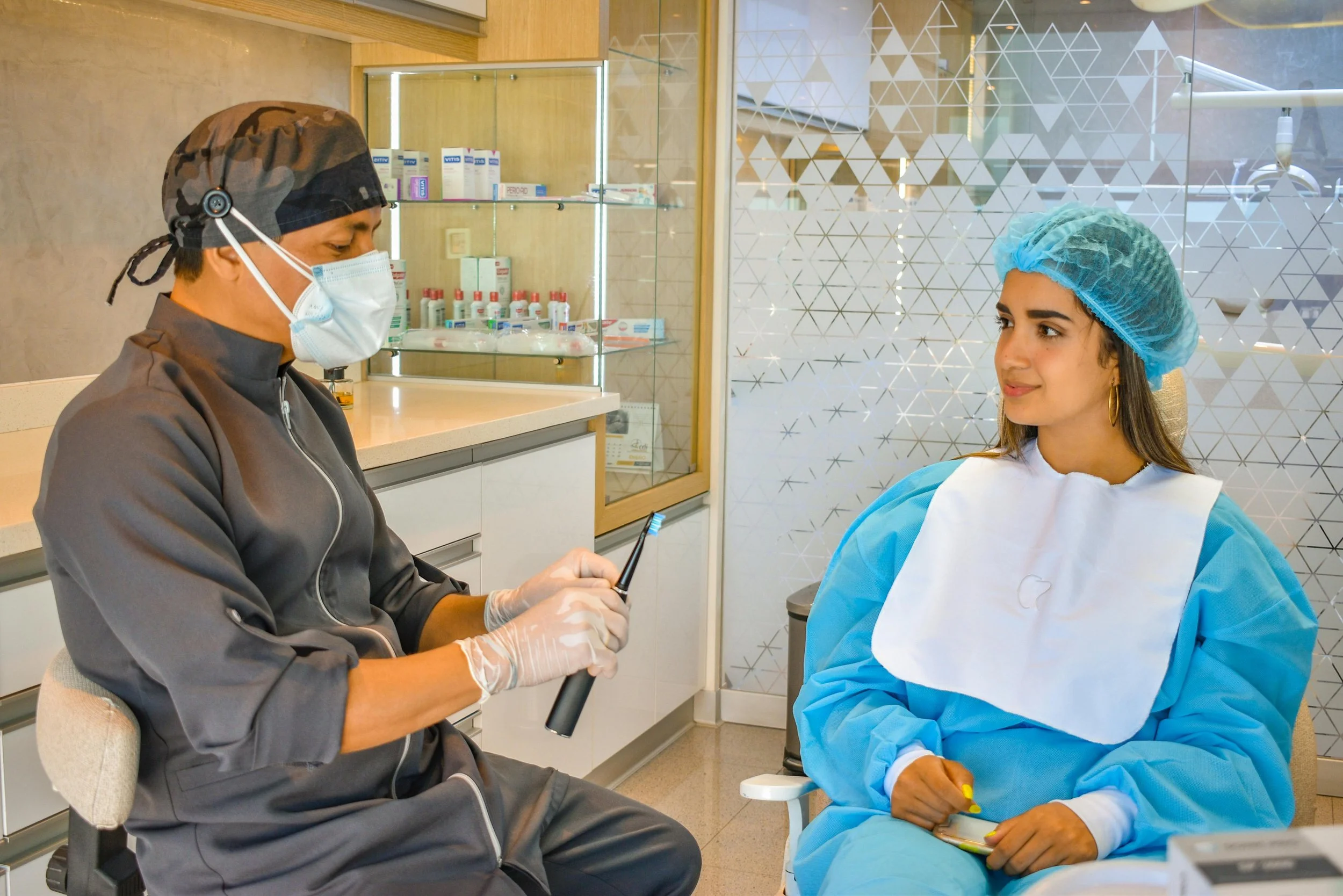
Why “Clinically Proven” Isn’t Enough — And What Actually Builds Trust in Health Products
Clinically proven’ sounds reassuring — but it often isn’t enough to build trust or drive real-world use. Here’s why strong evidence alone doesn’t guarantee adoption, and what actually makes health products easier to understand, recommend, and use.
Over the past few months, I’ve noticed how often health products lean on the phrase “clinically proven.”
It sounds reassuring. It feels scientific. It ticks a box.
But increasingly, it isn’t doing the job brands think it is.
The Real Problem
Most health brands aren’t trying to mislead anyone.
They invest in formulation.
They commission research.
They follow regulatory guidance.
The science is often solid.
And yet… adoption is slower than expected.
Clinicians hesitate.
The people using the product day to day feel unsure.
Not because the product doesn’t work — but because trust hasn’t quite landed.
This is where many strong products start to lose momentum.
Why “Clinically Proven” Isn’t Enough
From a clinician’s perspective, “clinically proven” is only the starting point.
If I’m going to recommend something to a patient, I need two things:
To be confident that solid research has actually been done
A clear, simple explanation I can pass on in plain English
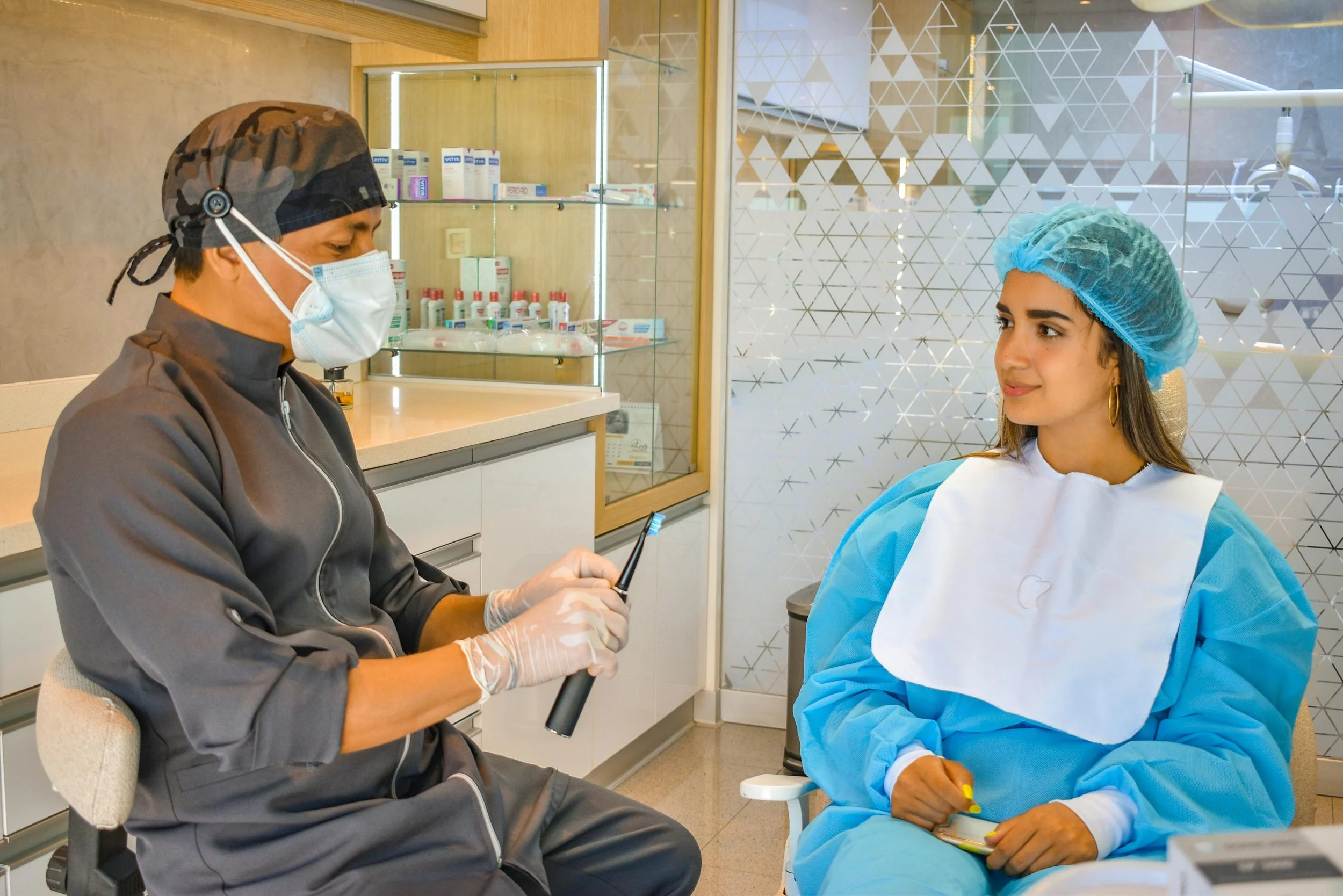
If I can’t quickly understand it myself, I can’t confidently explain it to someone sitting in my chair.
And if I’m not confident… I won’t recommend it.
What Happens in Real Life
I see this all the time in practice.
Patients come in confused by claims, ingredients, and competing messages — especially around toothpaste, electric toothbrushes, and newer oral health technologies.
They’ll say things like:
“I saw this online… is it actually any good?”
“There are so many options — I don’t know what to choose.”
So they turn to clinicians as their trusted source.
But here’s the key:
If clinicians don’t feel equipped to explain a product clearly, it often stays on the shelf.
Not because it’s ineffective.
But because it’s poorly communicated.
A Practical Lens for Evaluating Product Messaging
When reviewing health product content, I often come back to three simple questions:
Can a clinician quickly understand the evidence?
Can they explain it to a patient in 30 seconds?
Does it sound honest, balanced, and realistic?
If the answer to any of these is “no,” trust weakens.
The Trust–Information Paradox
There’s an interesting paradox in healthcare communication.
Too little information confuses people.
Too much information overwhelms them.
And in both cases, trust drops — leading to the same outcome:
No action.
No recommendation.
No purchase.
No traction.
Good products quietly stall.
What Builds Real Trust in Health Products
The strongest health brands don’t rely on slogans alone.
They:
show their evidence clearly
explain what it does — and what it doesn’t mean
respect clinicians’ time
respect the intelligence of the people using the product
They make it easy for professionals to feel confident passing the message on.
And that’s what builds real trust.
Bringing It Together
If this feels familiar, the issue is rarely the product itself.
It’s how the evidence is being translated, understood, and used in practice.
When communication is clear, clinically grounded, and relevant to real-world use, adoption becomes much easier.
What to Do Next
If you’re working on a health product and want to understand where trust may be breaking down, I’ve created a practical framework to help you assess and improve your messaging:
👉 5 Things Trusted Oral Health Brands Get Right
You can also explore why strong digital health products often struggle with adoption in practice:
👉 5 Reasons Your Digital Health Product Isn’t Being Used
Why health advice doesn’t stick — and what oral health can teach us about making habits easier
Health advice doesn’t fail because people don’t care. It fails because real life creates friction. Here’s what oral health can teach us about designing habits that actually stick — with clearer priorities, better prompts, and more supportive systems.
January is peak “new habits” season.
And yet, every year, many of those habits quietly fade — not because people don’t care, but because real life gets in the way.
In oral health, I see this all the time.
I’m Colette — a UK-based dental clinician and medical writer — and I spend a lot of time thinking about the overlap between oral health, prevention, and the systems (and tech) that make healthy habits easier to stick to.
Because advice can be clinically spot-on… and still not stick.
In clinic, it’s often clear that knowledge isn’t the missing piece. Many patients already know the basics: brush twice a day, clean between teeth, watch the sugar.
And yet, a patient said to me recently:
“I know what I’m meant to do… I just don’t manage it.”
That gap — between knowing and doing — is where prevention often breaks down.
And it’s why motivation alone is rarely the answer.
Why health advice doesn’t stick (even when it’s correct)
Most oral health (and general health) advice is well-intentioned and evidence-based.
But behaviour doesn’t happen in ideal conditions. It happens on busy mornings, late nights, shift patterns, school runs, sensory overload days, anxious days, and the “I’ve got nothing left in the tank” days.
So when habits slip, it’s rarely because someone doesn’t care.
More often, it’s because the habit sits behind too much friction.
Common reasons health habits fail (the friction points)
Too much complexity
Too many products, too many claims, too many “rules”. When people feel confused, they often do nothing.
No clear priority
If everything sounds equally important, it’s hard to know what matters today.
Timing
Advice is often given at a moment when people can’t act. The moment passes, and life takes over.
Shame and self-judgement
If someone feels they’ve already “failed”, they avoid the topic altogether. Shame doesn’t build habits — it blocks them.
Life factors that don’t get acknowledged
Neurodivergence, anxiety, depression, medication-related dry mouth, chronic illness, caring responsibilities, cost. These aren’t edge cases — they’re real life.
This is why I keep coming back to a simple idea:
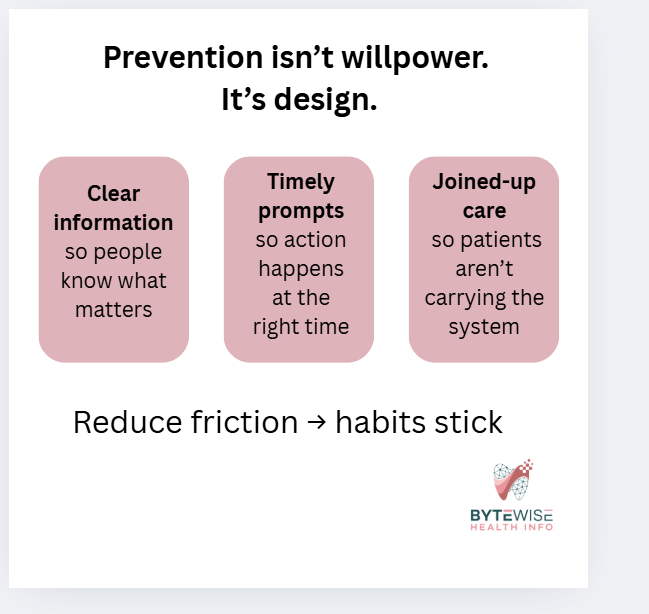
Prevention is easier when the system is designed to support it — not with more pressure, but with better support.
Knowing vs doing: where prevention really lives
Most prevention challenges sit in the gap between:
Capability — Do I know how? Do I have the tools?
Opportunity — Is my environment set up to help me?
Motivation — Do I want to do this, and does it feel worth it?
We often focus heavily on motivation: try harder, be consistent.
But opportunity is frequently the missing piece — the prompts, routines, environment, and joined-up care that make follow-through more likely.
This is also where digital tools can help — including reminders, smart prompts, and in some cases wearables — as long as they’re designed around real human behaviour, not perfect routines.
What better systems (and tech) could do
This isn’t about fancy gadgets or downloading yet another app that gets abandoned by Thursday.
It’s about reducing friction and making prevention easier to repeat.
1. Personalised prevention, not one-size-fits-all
Oral health advice is often generic — but people aren’t.
Someone with dry mouth, braces, diabetes risk, previous gum disease, or high sugar exposure needs different support from someone who’s low risk.
Better systems could translate risk into clear, usable guidance like:
“Here are your top two priorities this month.”
“Here’s the one habit that will give you the biggest win.”
“Here’s what to focus on until your next visit.”
Clarity reduces overwhelm.
2. Prompts at the right moment (not random reminders)
Most reminders fail because they arrive when you can’t act.
More effective prompts show up at the point of decision — when a routine is already happening.
Even low-tech prompts work well:
linking interdental cleaning to an existing habit
keeping brushes or floss where you actually sit
a simple routine card on the bathroom mirror
recall messages sent during opening hours, when booking is easy
Tech can help with timing — but the goal is simple: make the next right action easier.
3. Joined-up records that support joined-up care
Oral health is linked to systemic health, medication, pregnancy, and chronic conditions — yet records are often siloed. This is something I explore further in my white paper on integrating dental and medical health records.
When data isn’t joined up, we rely on:
patients repeating their story
memory (not a safe clinical tool)
missed prevention opportunities
Better integration could flag:
diabetes risk and gum inflammation
medication-related dry mouth
anticoagulants and dental planning
osteoporosis medications
pregnancy-related inflammatory windows
This isn’t about “more data”.
It’s about the system doing some of the heavy lifting — so patients don’t have to.
4. Prevention that continues between appointments
Most people see a dental professional occasionally — but habits are daily.
Systems and tech could help bridge that gap with:
simple check-ins
consistent, non-judgemental encouragement
short, personalised “next step” nudges
easy access to the right education at the right time
Prevention works best when it feels supported, not like a once-a-year reset.
Three tiny friction-reducers to try this week
You don’t need a personality transplant. You need a simpler setup.
1. Put tools where the habit actually happens
Out of sight = out of routine. Move tools to where you intend to use them and leave them on show.
2. Attach the habit to something you already do
Borrow an existing routine so you don’t rely on memory.
3. Shrink the task
A “minimum version” still counts. Consistency beats perfection.
A quick note on shame
If you’ve ever felt embarrassed about your oral health routine, you’re not alone.
But shame doesn’t create good habits.
It creates avoidance.
Better systems support people — they don’t judge them.
Where I’m going with this in 2026
This year I’m leaning further into the systems side of prevention.
Not just what we tell people to do — but what actually helps people do it, consistently, in real life.
That includes:
clearer risk communication
better-timed prompts
joined-up records
and tech that supports habits without adding guilt
I’m also starting a behaviour change course to strengthen this side of my work — so my content is not only clinically accurate, but genuinely usable.
One last question
What’s the biggest thing that gets in the way of oral health habits sticking — for you, or for your patients?
Forgetfulness?
Time?
Anxiety or sensory issues?
Cost or access?
Medication or health factors?
Or just… life?
These real-world barriers are where better prevention design starts.