ByteWise is here — a space where oral health, digital health and human stories meet. In this first post, I share why the mouth matters more than people realise, how it connects to whole-body health, and what you can expect from the ByteWise community moving forward.
Insights
Why ByteWise exists — and why oral health belongs in the wider health conversation
Start Here
Explore further insights on ….
Communication & Behaviour change
When uptake is low, engagement is poor or the same questions keep coming back, creating more content can feel like the obvious answer. But the same symptom can have very different causes. Here’s how to work out what is actually going wrong before you add more content to the pile.
People can understand health advice perfectly well and still struggle to act on it. This article explores the gap between knowing and doing, and why timing, friction, confidence and real-life context matter.
The same question keeps coming back, even though the information already exists. This article explores what repeated questions can reveal about timing, findability, language, consistency and the next step people actually need.
Dental software training can look successful in the room and still fall apart in practice. This article explores why product demos are not enough, how confidence and real-world workflows affect use, and why the first step is understanding what is actually getting in the way.
Clinical training can be clear, relevant and well designed, yet still fail to change practice. The reason is often not the learning itself, but the workflow, responsibilities and systems surrounding it.
Accurate health information does not always lead to understanding or action. Sometimes the real problem is a hidden knowledge gap between what an organisation knows and what its audience needs to know.
Simply saying “we use AI” does not automatically create trust. This article explores why clear explanations, human oversight, patient communication and real-world workflow matter when introducing AI into healthcare.
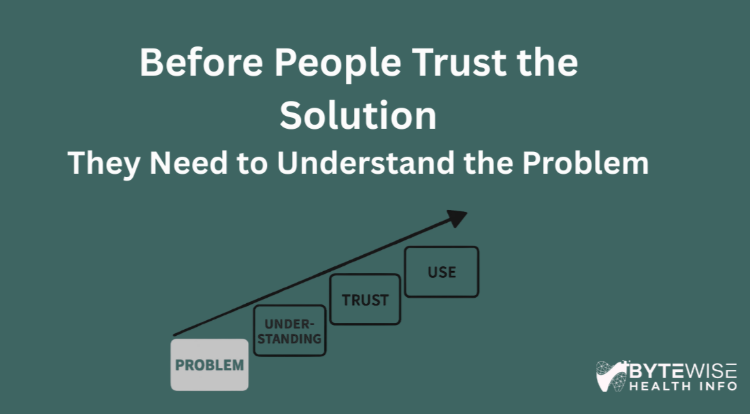
Good healthcare solutions can struggle when people are shown the answer before they fully understand the problem. This article explores why problem clarity, workflow understanding and education are essential to trust, adoption and implementation.
A patient’s hospital stay prompted a bigger question: what happens when oral hygiene is overlooked during admission? This piece explores hospital oral care, pneumonia risk, and the communication gaps that can stop useful evidence from becoming everyday practice.
In healthcare, are we genuinely developing through CPD — or simply documenting that we’ve done it? This article explores how better reflection and clearer learning goals can turn professional development into meaningful change in practice.
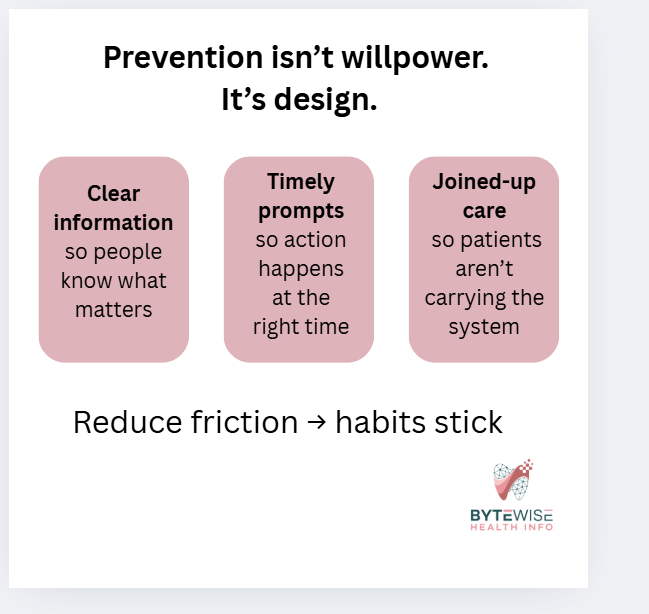
Health advice doesn’t fail because people don’t care. It fails because real life creates friction. Here’s what oral health can teach us about designing habits that actually stick — with clearer priorities, better prompts, and more supportive systems.
Dental software training can look successful in the room and still fall apart in practice. This article explores why product demos are not enough, how confidence and real-world workflows affect use, and why the first step is understanding what is actually getting in the way.
Simply saying “we use AI” does not automatically create trust. This article explores why clear explanations, human oversight, patient communication and real-world workflow matter when introducing AI into healthcare.
Dental teams may be well placed to identify wider health risks, but screening alone is not enough. The real challenge is creating clear pathways so clinically useful information can move between professionals and lead to meaningful action.
Digital health tools can provide clinically plausible information and still leave people unsure what it means or what to do next. This article explores how the way information is prioritised, connected and presented can influence real-world health decisions.
Dental records capture a huge amount of clinical information, but do they reflect the biological nature of disease? This article explores the gap between clinical understanding, structured data and the future of integrated oral healthcare.
Why do good digital health tools sometimes fail to become part of everyday practice? This piece explores the gap between what works in theory and what fits into real clinical workflows — and the role communication, habit and friction can play in adoption.
A patient’s hospital stay prompted a bigger question: what happens when oral hygiene is overlooked during admission? This piece explores hospital oral care, pneumonia risk, and the communication gaps that can stop useful evidence from becoming everyday practice.
In healthcare, are we genuinely developing through CPD — or simply documenting that we’ve done it? This article explores how better reflection and clearer learning goals can turn professional development into meaningful change in practice.
Dentistry sees patients regularly over many years, creating a unique record of behaviour, self-care, and subtle health changes. What could dental records reveal about cognitive health if health systems were better connected?
Digital Health & Innovation
Oral Health & Prevention
A patient’s hospital stay prompted a bigger question: what happens when oral hygiene is overlooked during admission? This piece explores hospital oral care, pneumonia risk, and the communication gaps that can stop useful evidence from becoming everyday practice.
In healthcare, are we genuinely developing through CPD — or simply documenting that we’ve done it? This article explores how better reflection and clearer learning goals can turn professional development into meaningful change in practice.
Choosing toothpaste shouldn’t feel overwhelming. This simple guide breaks down fluoride, hydroxyapatite, whitening pastes and SLS free options so you can choose the right toothpaste with confidence.
Patient & Clinical Education
Patients can understand oral health advice and still struggle to act on it. This article explores the practical, physical and personal barriers that can sit between understanding and behaviour.
Dental software training can look successful in the room and still fall apart in practice. This article explores why product demos are not enough, how confidence and real-world workflows affect use, and why the first step is understanding what is actually getting in the way.
Clinical training can be clear, relevant and well designed, yet still fail to change practice. The reason is often not the learning itself, but the workflow, responsibilities and systems surrounding it.
Accurate health information does not always lead to understanding or action. Sometimes the real problem is a hidden knowledge gap between what an organisation knows and what its audience needs to know.
A patient’s hospital stay prompted a bigger question: what happens when oral hygiene is overlooked during admission? This piece explores hospital oral care, pneumonia risk, and the communication gaps that can stop useful evidence from becoming everyday practice.
In healthcare, are we genuinely developing through CPD — or simply documenting that we’ve done it? This article explores how better reflection and clearer learning goals can turn professional development into meaningful change in practice.


Clinically proven’ sounds reassuring — but it often isn’t enough to build trust or drive real-world use. Here’s why strong evidence alone doesn’t guarantee adoption, and what actually makes health products easier to understand, recommend, and use.