

Case Study:
Boosting Local Patient Search Visibility for Guided Biofilm Therapy at Blossomfield Dental Care
Patient education, SEO, and trust-building
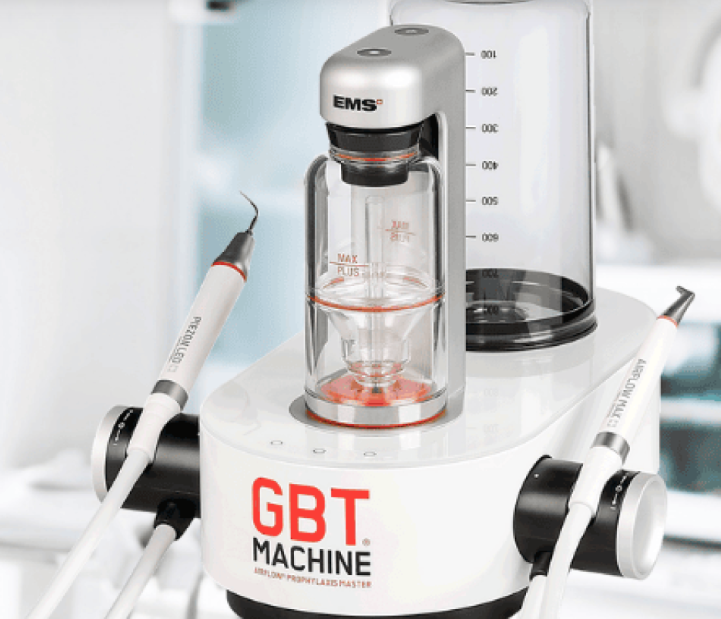
Position #1 organic Google ranking for “EMS Guided Biofilm Therapy what to expect”
Snapshot
Format: Patient education blog (SEO-informed)
Client: Blossomfield Dental Care (Solihull, UK)
Audience: Existing and prospective dental patients
Focus: Explaining EMS Guided Biofilm Therapy (GBT) clearly and accurately
Output: Long-form patient-facing website article
The Challenge
Blossomfield Dental Care had introduced EMS Guided Biofilm Therapy as a modern approach to preventive dental care.
For many patients, the treatment was unfamiliar.
They wanted to know:
what was different from a traditional scale and polish;
what the appointment would involve;
whether it would be comfortable;
and whether the treatment was right for them.
Search behaviour showed that people were also actively looking for answers around Guided Biofilm Therapy and what to expect.
The opportunity was to create content that could do two jobs at once: help patients understand the treatment and make that information easier to find at the point they were considering care.
My Approach
I structured the article around the questions patients were already asking.
The content focused on:
plain-language explanations grounded in clinical accuracy;
a step-by-step account of the treatment experience;
reassurance around comfort and safety;
FAQ-style sections addressing common concerns;
and a tone that informed without overselling.
The article was designed around patient intent rather than keywords alone.
That meant thinking about what somebody searching “what to expect” was likely to need before they felt confident taking the next step.
The result was patient education that also aligned naturally with high-intent search behaviour.
The Outcome
The published article achieved:
Position #1 organic Google ranking for “EMS Guided Biofilm Therapy what to expect”;
visibility within Google’s AI Overview;
and improved discoverability for patients researching GBT.
The article now supports patients before first contact by answering common questions at the point they are deciding whether to enquire or book.
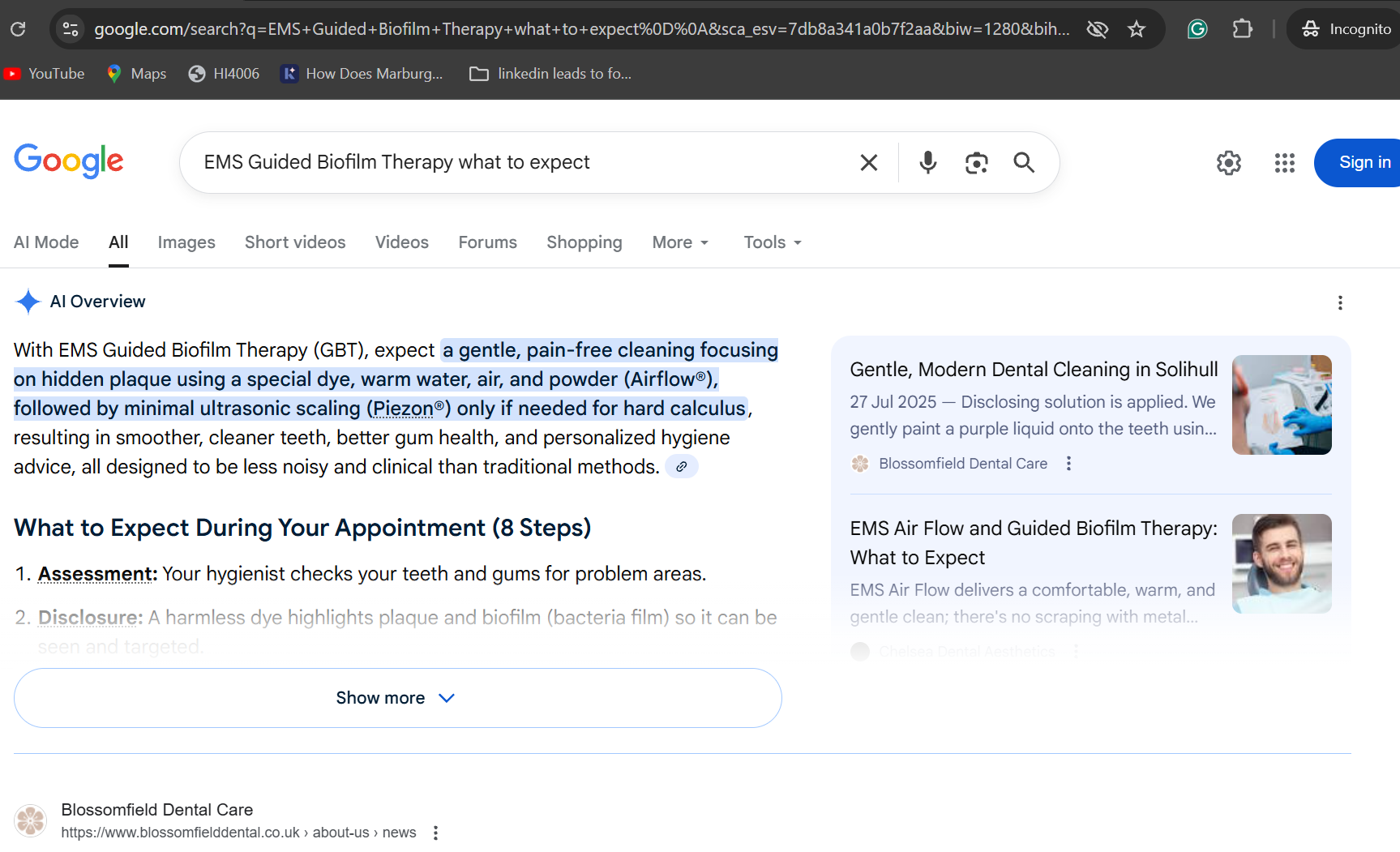
Search results showing a #1 organic Google ranking and AI Overview visibility for this article.
Why This Matters
High-intent health searches often happen when somebody is close to making a decision.
A search such as “what to expect” may reflect uncertainty about comfort, value or an unfamiliar treatment.
Clear patient education can reduce that uncertainty before the person ever contacts the practice.
In this project, SEO was not simply about increasing visibility.
It was about helping the right information appear when somebody needed it.
That meant combining:
patient education;
clinical accuracy;
search intent;
and trust-led communication.
The result was content that supported both understanding and discoverability without relying on promotional language.
My role
My role included:
patient-intent keyword and search research;
clinical content development;
article structure and FAQ design;
translating treatment protocols into accessible language;
and aligning patient education with search behaviour.
The outcome in practice
This project demonstrates how patient education and SEO can work together without compromising clinical credibility.
The content was designed first around what patients needed to understand, then shaped so that those answers could also be found through search.
Clearer information helped patients make sense of an unfamiliar treatment. Search strategy helped that information reach them at the point they were looking for it.
Looking for patient education that people can actually find and use?
I help oral-health organisations and services turn complex information into clear, useful content shaped around what patients need to understand and what gets in the way of action.