

What Dental Records Could Reveal About Cognitive Health — and Why Health Systems Need to Talk to Each Other
Healthcare systems often treat dental records and medical records as separate worlds. Yet dentistry sees patients regularly over many years, creating a unique longitudinal view of behaviour, self-care, and subtle health changes.
That continuity means dental teams sometimes notice early shifts in routine, memory, or self-care long before those changes are recognised elsewhere in the healthcare system.
The question isn’t whether dentistry can diagnose cognitive decline. It can’t.
But could observations captured in dental records contribute to earlier, more connected care if health systems were better integrated?
Mrs Chen’s Story
Mrs Chen has been coming to the same dental practice for eight years.
Always punctual. Always prepared. Chatting easily with the front desk staff.
Then last month, she arrived confused about her appointment time.
This month, she forgot her bank card for the first time and seemed unusually flustered during her routine cleaning.
Her dental hygienist notices these changes.
But her GP never sees this information.
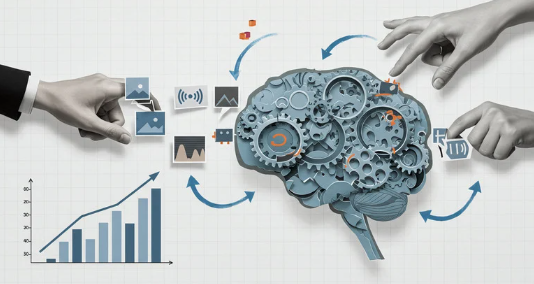
Mrs Chen isn’t alone.
Many people living with early cognitive change show up regularly somewhere long before symptoms are recognised — not in neurology clinics, not in memory services, but in the dental chair.
Dentistry Runs on Cadence
Adults in England average around four to five GP consultations each year according to analysis of English primary care records, but many of these interactions are brief, problem-focused appointments. Increasingly, they are conducted remotely, or patients may see a different clinician each time depending on availability.
Dental care operates differently.
Patients often return even when nothing feels wrong — for routine examinations, hygiene visits, or ongoing periodontal care. These appointments are typically face-to-face and often involve the same dental professionals over many years.
That rhythm creates something powerful: continuity.
Dental teams come to understand a patient’s usual behaviour, communication style, and level of self-care. Over time, that familiarity makes subtle shifts easier to notice.
Not as diagnosis.
Not as prediction.
But as small signals that something in a person’s health story may be changing.
This Isn’t About Prediction — It’s About Connection
This isn’t a dementia piece. It’s a systems piece.
Research continues to explore links between gum disease, inflammation, and cognitive health. But the real focus here is simpler: observations that remain trapped inside dental records.
Instead, the question is what happens when small, relevant observations in dentistry stay isolated within separate systems — and what might change if those observations were safely, consentedly connected to the wider health picture.
Oral health and cognitive health share many of the same underlying pressures: ageing, diabetes, cardiovascular disease, smoking, medication burden, depression, frailty, nutrition, sleep, and social inequality.
Research increasingly shows these connections are not coincidental — they are systemic.
People don’t live these as separate categories. They live them as one life.
So the more useful question may not be “does gum disease predict dementia?”
It may simply be this:
If oral health reflects the same underlying health pressures shaping cognitive health, what could dental observations contribute to earlier, more connected care?

When health records stay separated, patterns stay invisible.
Dentistry sees patients regularly over many years, creating a unique record of behaviour and self-care. When those observations remain trapped in isolated systems, important signals can be lost.
The Shared Landscape of Risk
Oral health and cognitive health share many of the same risk factors:
• ageing
• diabetes
• cardiovascular disease
• smoking
• medication burden
• depression
• frailty
• nutrition and sleep
• social and economic inequality
These aren’t separate categories in real life.
People live them as one health story.
So the question becomes:
If oral health reflects the same pressures shaping wider health, what could dental observations contribute to earlier, joined-up care?
The Overlooked Asset: Time
Dentistry sees people over time.
A patient’s “normal” becomes visible — and so does its drift.
Consider a few everyday scenarios.
Case 1
A retired teacher who has managed complex periodontal care independently for years suddenly struggles to follow post-treatment instructions and misses follow-up appointments.
Case 2
A businessman known for meticulous oral hygiene begins attending with noticeably poorer dental care, explaining he has simply “been busy”.
Case 3
A grandmother who always brings photos of her grandchildren becomes quieter, more anxious during procedures, and less socially engaged.
None of these examples are dramatic.
They’re small inconsistencies — changes that don’t fit the patient’s usual baseline.
And that raises a difficult question:
What should clinicians do with observations that feel meaningful but not diagnostic?
Right now, those signals often stay inside the dental record.
The Informatics Gap
Dentistry’s continuity offers something valuable: longitudinal observation.
But that visibility is stranded inside separate systems.
A dental note about memory lapses may never meet a GP’s concern about medication adherence.
A hygienist’s observation about declining self-care may never connect with wider health changes.
The signals exist.
But the infrastructure doesn’t allow them to form patterns.
If healthcare systems want earlier support for patients, the bottleneck may not be new biomarkers.
It may simply be better connectivity between the records we already have.
What Shared Health Records Could Enable
Imagine if dental observations could travel — not as diagnostic claims, but as structured, consent-based summaries.
For example:
“Patient history: 8 years of consistent routine care, punctual and well-prepared. Recent changes include two missed appointments in three months after years of consistency. Patient appeared more forgetful during recent visits and required additional support with post-care instructions.”
Shared carefully and with patient consent, observations like this could support several quiet shifts in care.
Continuity of concern
Medical teams could see patterns rather than isolated events.
Earlier feedback loops
Changes in oral health or behaviour might prompt earlier conversations.
Reduced burden on families
Patients wouldn’t need to repeat the same information across multiple systems.
True collaboration between teams
Dental and medical clinicians could see the same evolving picture.
Learning From Connected Data
Integrated health records would not simply improve communication.
They would also support learning.
Linked data could help reveal:
• how behavioural signals cluster with frailty or medication complexity
• how oral health changes evolve alongside wider health pressures
• which early interventions actually help patients maintain independence longer
Not to predict outcomes.
But to design care that fits real lives better.
Why This Still Isn’t Normal
Despite the potential, integrated dental and medical records remain rare.
Several barriers persist.
Separate systems and standards
Dental and medical IT infrastructures evolved independently.
Workflow pressure
Clinicians cannot manage more alerts. They need smart summaries that fit existing workflows.
Cultural separation
Dentistry is still often treated as separate from mainstream healthcare, and its data follows the same path.
The challenge of disconnected health records is explored further in my white paper on integrated dental and medical records.
Privacy Must Come First
Any system connecting dental and medical records must be built on strong privacy foundations.
This means:
• granular patient consent
• transparent information sharing processes
• the ability to withdraw consent easily
• clear professional boundaries around observational information
Trust is not just technical.
It’s about giving people control over their own health story.
A Quieter Kind of Progress
Healthcare innovation often focuses on dramatic breakthroughs.
But sometimes progress is quieter.
Dentistry already observes change.
It already documents behaviour, continuity, and subtle shifts over time.
The opportunity lies in allowing those observations — when appropriate and with consent — to travel across healthcare systems.
Not as predictions.
Not as diagnoses.
But as context that helps care become more connected.
No new test.
No dramatic technology.
Just better communication between the records we already keep.
And that may be one of the most meaningful improvements healthcare systems could make.
About the Author
Colette Lawler is a UK-based dental clinician and medical writer specialising in oral health, digital health, and evidence-based healthcare communication.
With more than 20 years of clinical experience and a background in oral health science and health informatics, she helps healthcare organisations, health technology teams, and oral health brands translate complex evidence into clear, trustworthy communication that supports better decisions.
She is the founder of ByteWise Health Info, where she focuses on the intersection of oral health, digital health systems, and integrated healthcare communication.
